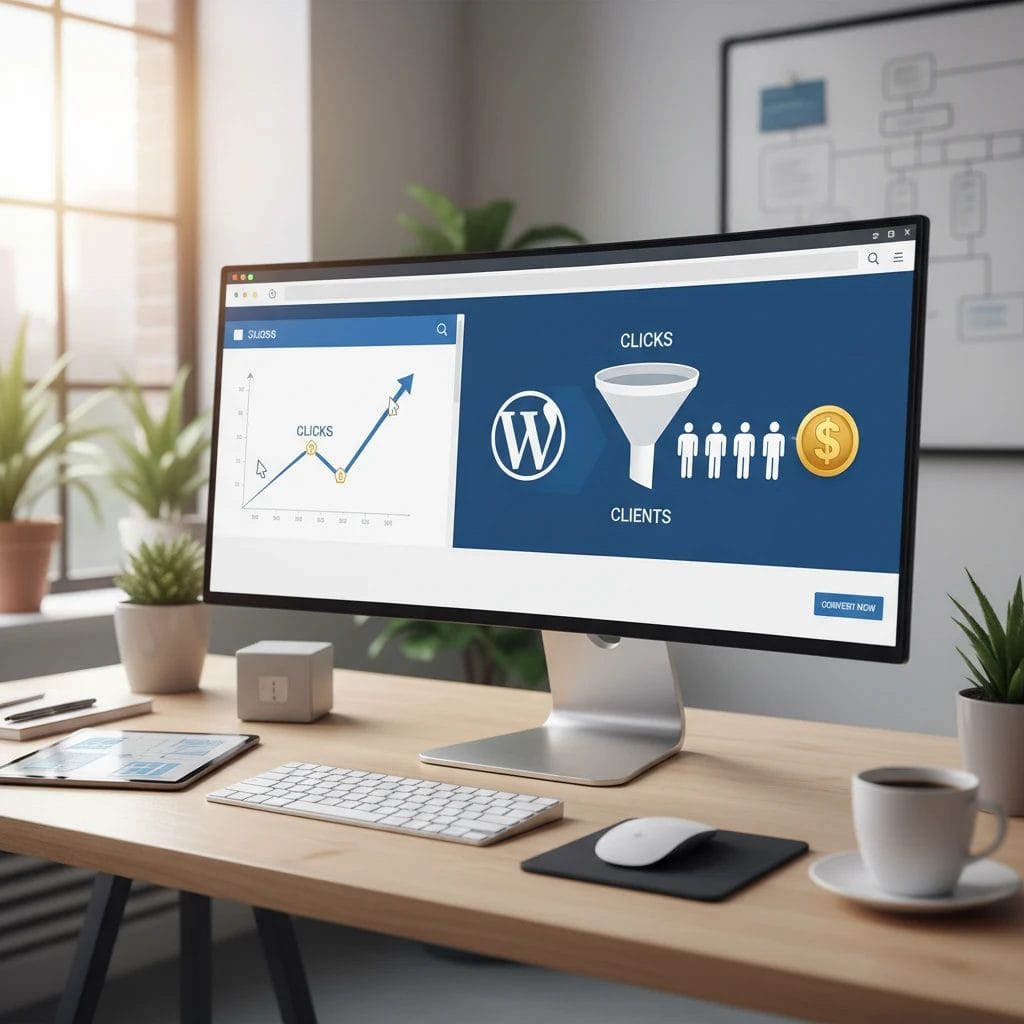

In today’s rapidly evolving digital landscape, a static website simply isn’t enough for sustainable growth. Small-to-medium businesses (SMBs) need a dynamic strategy that leverages the power of WordPress, AI automation, and strategic SEO to not only attract customers but also streamline operations and maximize profitability. 610 Digital offers a comprehensive approach designed to be a true growth partner.
This is more than just web design; it’s about building a robust digital ecosystem that fuels your business. We focus on creating long-term value and measurable results for businesses looking to thrive in the competitive online environment.
Beyond Websites: Why Smart Businesses Need a Digital Growth Partner in 2026
The Limitations of One-Off Web Design Projects
The traditional approach to web design often involves a single project with a defined scope and timeline. Once the website is launched, the relationship with the agency typically ends, leaving the business to manage updates, security, and ongoing marketing efforts independently. This “set it and forget it” mentality is a critical pitfall. One-off projects lack the ongoing optimization and adaptation necessary to thrive in today’s dynamic digital landscape. Furthermore, they often fail to integrate with critical business systems, resulting in siloed data and inefficient workflows. The lack of a long-term strategy can also lead to missed opportunities for leveraging new technologies like AI. Think of a contractor whose website looks great at launch but slowly slides down search rankings as competitors actively optimize their online presence.
From Vendor to Partner: Embracing a Long-Term Growth Mindset
A true digital growth partner takes a holistic and proactive approach. Instead of simply delivering a website, they collaborate with the business to develop and implement a comprehensive digital strategy aligned with its specific goals and objectives. This includes ongoing SEO optimization, content creation, AI-driven automation, and continuous monitoring and analysis to identify opportunities for improvement. Embracing a long-term growth mindset means viewing the website as a living, breathing entity that requires constant nurturing and refinement. This also entails a deeper understanding of the client’s business and industry, allowing the partner to anticipate future trends and proactively adapt the digital strategy accordingly. This goes beyond being a mere vendor; it means becoming an invested stakeholder in the client’s success.
How 20+ Years of Experience Shapes Our Growth-Focused Approach
With over 20 years of experience in the digital marketing space, 610 Digital has witnessed firsthand the evolution of the internet and its impact on businesses. This extensive experience provides us with a unique perspective and a deep understanding of what works and what doesn’t. We leverage this knowledge to develop data-driven strategies that are tailored to each client’s specific needs and goals. Our long history has also allowed us to build strong relationships with industry-leading technology providers, enabling us to implement cutting-edge solutions and stay ahead of the curve. The 610 Digital commitment goes beyond simply building websites; we architect sustained growth through proven strategies honed over decades.
WordPress: The Engine Powering AI-Driven Business Growth
Why WordPress Remains King for SMBs in 2026 (and Beyond)
Despite the emergence of newer website platforms, WordPress remains the dominant choice for SMBs in 2026 for several compelling reasons. First, its open-source nature and vast plugin ecosystem offer unparalleled flexibility and customization options. This allows businesses to tailor their websites to their specific needs without being locked into proprietary systems. Second, WordPress is incredibly SEO-friendly, providing a solid foundation for organic search visibility. Third, the platform’s ease of use empowers businesses to manage their content and make updates without relying on expensive developers. And finally, as discussed more in the next section, WordPress plays a vital role in AI integration. The availability of countless plugins that facilitate AI automation makes WordPress a future-proof solution. Its adaptability ensures it continues to be relevant as technology evolves. A well-designed WordPress site can be the cornerstone of your online success.
Leveraging WordPress Plugins for AI Automation: Lead Generation and Customer Engagement
WordPress’s true power lies in its ability to integrate with AI-powered plugins, transforming your website into a dynamic lead generation and customer engagement machine. For instance, AI-powered chatbots can automate customer support inquiries, providing instant answers and freeing up your team to focus on more complex issues. Lead generation plugins can analyze website visitor behavior and automatically qualify leads, ensuring that your sales team only focuses on the most promising prospects. Furthermore, AI-driven content optimization tools can help you create engaging and relevant content that resonates with your target audience and improves your search engine rankings. By strategically leveraging these plugins, you can automate key business processes, improve efficiency, and drive significant growth. Consider a fitness center using a chatbot to answer common questions about class schedules and membership options, instantly qualifying leads and booking consultations.
WordPress Security in the Age of AI: Best Practices and Considerations
As AI becomes increasingly integrated into WordPress websites, it’s crucial to prioritize security. AI-powered security plugins can help detect and prevent malicious attacks, but it’s equally important to implement basic security best practices, such as using strong passwords, keeping WordPress core and plugins updated, and regularly backing up your website. Another potential pitfall is using poorly coded plugins that might introduce vulnerabilities. Therefore, choose plugins from reputable developers with a proven track record of security. Moreover, stay vigilant about AI-driven threats, such as sophisticated phishing attacks and malware that can exploit vulnerabilities in AI-powered systems. Regularly auditing your website’s security and staying informed about the latest threats is essential to protect your business from cyberattacks. Security should always be a proactive, not reactive, strategy.
AI Automation for SMBs: Streamlining Operations and Boosting Efficiency
Identifying AI Automation Opportunities Within Your Business
The first step in leveraging AI automation is to identify areas within your business where it can have the greatest impact. Start by analyzing your existing workflows and identifying repetitive, time-consuming tasks that could be automated. Look for bottlenecks or inefficiencies that are hindering your productivity and consider how AI could help streamline those processes. Common areas for AI automation include lead generation, customer support, content creation, and data analysis. Ask yourself, “Where are my employees spending the most time on tasks that don’t require critical thinking or creativity?” These are prime candidates for AI automation. A crucial consideration is data readiness – ensuring your data is clean, structured, and accessible for AI algorithms to process effectively. Without clean and organized data, AI automation initiatives are likely to fail. Consider investing in a data audit and cleansing process before implementing AI solutions.
Examples of AI-Powered Workflows: Lead Qualification, Customer Support, and Content Creation
The possibilities for AI-powered workflows are vast. For lead qualification, AI can analyze website visitor behavior, social media activity, and other data points to automatically identify and score leads based on their likelihood to convert. In customer support, AI-powered chatbots can handle routine inquiries, freeing up your support team to focus on complex issues. AI can also be used to generate personalized email responses, create blog posts, and even write social media updates. One example: An HVAC company using AI to analyze customer inquiries about malfunctioning AC units, automatically diagnosing common issues and scheduling service appointments. Another example: A contractor using AI to generate draft proposals based on project requirements and historical data, saving hours of manual work. Transforming WordPress into a growth engine often means automating these exact types of workflows.
The ROI of AI: Measuring the Impact on Efficiency and Profitability
Measuring the ROI of AI automation is crucial to justify your investment and ensure that you’re achieving your desired results. Track key metrics such as reduced labor costs, increased lead generation, improved customer satisfaction, and higher conversion rates. Compare these metrics before and after implementing AI automation to quantify the impact. It’s also important to track less obvious benefits, such as improved employee morale (as employees are freed from tedious tasks) and reduced errors. A pitfall to avoid is focusing solely on short-term gains without considering the long-term impact of AI automation. For example, implementing an AI-powered chatbot may reduce immediate customer support costs, but it’s essential to monitor customer satisfaction to ensure that the chatbot is providing a positive experience. Example: A fitness center invested in AI automation and saw a 30% increase in lead generation, a 20% reduction in customer support costs, and a 15% increase in overall revenue within six months. This demonstrates the potential for AI to drive significant growth and profitability.
Chester County SEO: Dominating Local Search and Attracting High-Value Leads
The Power of ‘Near Me’ Searches: Optimizing for Local Intent
In today’s mobile-first world, “near me” searches have become increasingly prevalent. People are using their smartphones to find local businesses and services in real-time. Optimizing your website for local intent is crucial to capturing this valuable traffic. This involves incorporating location-specific keywords into your website content, meta descriptions, and title tags. Also, ensure your website is mobile-friendly and loads quickly, as mobile users expect instant results. Claim and optimize your Google Business Profile (more on this below), and encourage customers to leave reviews. Ignoring “near me” searches means missing out on a huge pool of potential customers who are actively looking for your services in Chester County. Consider the power of a potential customer searching “best HVAC repair near me” on a cold winter night. You want your business to be the first one they see. The key is understanding and responding to user intent.
Building a Strong Local SEO Foundation: Google My Business and Citation Management
Your Google Business Profile (GBP) is the cornerstone of your local SEO strategy. Claim and optimize your GBP listing with accurate and up-to-date information, including your business name, address, phone number, website, hours of operation, and services offered. Add high-quality photos and videos to showcase your business and attract attention. Encourage customers to leave reviews on your GBP listing, as positive reviews can significantly improve your search rankings and attract new customers. Citation management is also crucial. Ensure that your business is listed in relevant online directories and that your name, address, and phone number (NAP) are consistent across all citations. Inconsistencies in your NAP can confuse search engines and negatively impact your rankings. Services like Moz Local can help manage and optimize your citations. A complete and optimized GBP listing signals trust and authority to both Google and potential customers.
Targeting Key Chester County Keywords: Strategies for Driving Local Traffic
Identifying and targeting relevant Chester County keywords is essential for driving local traffic to your website. Conduct keyword research to identify the terms that people are using to search for your products or services in Chester County. Use tools like Google Keyword Planner and SEMrush to find high-volume, low-competition keywords. Incorporate these keywords into your website content, meta descriptions, and title tags. Also, consider creating location-specific landing pages that target specific neighborhoods or towns within Chester County. For example, a landscaping company might create separate landing pages for West Chester, Exton, and Downingtown, each targeting relevant keywords and showcasing local projects. Remember to focus on long-tail keywords, which are longer and more specific phrases that indicate a high level of intent. For instance, instead of targeting “landscaping,” target “affordable landscaping services in West Chester PA.”
Google Ads Management: Maximizing ROI with Data-Driven PPC Campaigns
Effective Google Ads management goes far beyond simply setting up a campaign. It requires a deep understanding of your target audience, meticulous keyword research, compelling ad copy, and continuous optimization based on data. The key is to transform ad spend into measurable, profitable growth. We, at 610 Digital, focus on campaigns that deliver a strong return on investment (ROI) by consistently monitoring performance and adjusting strategies. A common pitfall is failing to regularly review and refine your campaigns. Set aside dedicated time each week to analyze metrics, test new ad variations, and optimize your bidding strategies. Remember, the best PPC campaigns are living, breathing entities that evolve with the market.
The Evolution of Google Ads: Staying Ahead of Algorithm Changes
Google Ads is constantly evolving, with algorithm updates and new features rolling out regularly. What worked last year might not work today. For instance, Google’s increasing focus on user intent means that keyword targeting alone is no longer sufficient. You need to understand the search queries driving traffic and ensure your landing pages directly address user needs. Another crucial factor is mobile optimization. With the majority of searches now originating on mobile devices, your ads and landing pages must provide a seamless mobile experience. If your mobile site is slow or difficult to navigate, you’ll lose potential customers and your Quality Score will suffer. Successful Google Ads management in 2026 demands continuous learning and adaptation. We at 610 Digital dedicate time each month to training to remain current.
Crafting High-Converting Landing Pages: Design, Copy, and User Experience Best Practices
Your Google Ads campaign is only as good as your landing page. A poorly designed or irrelevant landing page can negate even the most targeted ad campaigns. Focus on creating a clear, concise, and compelling message that aligns with the user’s search query. Use strong headlines, benefit-driven copy, and a clear call to action. Prioritize a clean and intuitive design that makes it easy for visitors to find the information they need. Pay close attention to page speed and mobile responsiveness. A/B testing is essential for optimizing your landing pages. Test different headlines, layouts, and calls to action to identify what resonates best with your audience. For example, try testing a video on your landing page. Consider implementing A/B testing for your design; some have seen over a 20% increase in conversion rates. The goal is to create a frictionless user experience that guides visitors towards conversion. Compelling visuals and a clear call to action are key.
Tracking and Analyzing PPC Performance: Metrics That Matter and How to Improve Them
Data is the lifeblood of effective PPC management. You need to track the right metrics and analyze them regularly to identify areas for improvement. Focus on key performance indicators (KPIs) such as click-through rate (CTR), conversion rate, cost per acquisition (CPA), and return on ad spend (ROAS). Use Google Analytics to track user behavior on your landing pages, such as bounce rate, time on page, and goal completions. Set up conversion tracking to measure the effectiveness of your campaigns and identify which keywords and ads are driving the most valuable leads. Don’t fall into the trap of vanity metrics. Focus on the metrics that directly impact your bottom line. For example, a high CTR is meaningless if it doesn’t translate into conversions. Implement regular reporting and analysis to identify trends, patterns, and opportunities for optimization. We at 610 Digital provide regular reports to our clients with actionable insights.
Beyond the Tech: The Importance of Strategic SEO in a Changing Landscape
While technical SEO provides the foundation, strategic SEO is what truly drives long-term, sustainable growth. It’s about understanding your business goals, identifying your target audience, and developing a comprehensive plan to attract and engage them through search engines. SEO is not a one-time fix; it’s an ongoing process that requires constant adaptation and refinement. We at 610 Digital begin our SEO partnerships with a deep dive into understanding your business model, ideal customer profile, and competitive landscape. Many businesses make the mistake of focusing solely on keyword rankings. While rankings are important, they are only one piece of the puzzle. A more holistic approach considers the entire user journey, from initial search query to conversion.
Understanding Google’s Algorithm Updates: Adapting Your SEO Strategy for 2026
Google’s algorithm is constantly evolving, with hundreds of updates released each year. While some updates are minor, others can have a significant impact on your website’s rankings. Staying informed about these updates and adapting your SEO strategy accordingly is crucial for maintaining visibility. Google’s focus is increasingly on providing users with the most relevant and high-quality results. This means that factors such as content quality, user experience, and mobile optimization are more important than ever. For example, the increasing importance of E-A-T (Expertise, Authoritativeness, Trustworthiness) signals highlights the need to demonstrate credibility in your industry. Failing to adapt to these changes can result in decreased rankings, reduced traffic, and lost revenue. We at 610 Digital closely monitor Google’s algorithm updates and adjust our strategies accordingly to ensure our clients stay ahead of the curve.
Content is Still King: Creating High-Quality, Engaging Content That Ranks
In the ever-changing world of SEO, one thing remains constant: content is still king. High-quality, engaging content is the cornerstone of any successful SEO strategy. It attracts visitors, keeps them on your site longer, and signals to Google that your website is a valuable resource. Focus on creating content that is informative, well-written, and relevant to your target audience. Conduct thorough keyword research to identify the topics and questions your audience is searching for. Use a variety of content formats, such as blog posts, articles, videos, and infographics, to keep your audience engaged. Don’t just create content for the sake of creating content. Focus on providing value and solving problems for your audience. A common mistake is creating thin, low-quality content that doesn’t provide any real value to users.
The Role of Link Building in Modern SEO: Earning Authority and Trust
Link building remains a crucial aspect of SEO, but the strategies have evolved significantly over the years. In the past, it was possible to manipulate search rankings through aggressive link building tactics. However, Google’s algorithm is now much more sophisticated and can easily detect and penalize these tactics. The key to successful link building in 2026 is to focus on earning high-quality, relevant links from authoritative websites. This involves creating valuable content that other websites will naturally want to link to, as well as actively reaching out to influencers and journalists in your industry. Avoid buying links or participating in link schemes, as these can damage your website’s reputation and lead to penalties. Think of link building as earning trust and authority in the eyes of Google. One strategy involves participating in guest blogging on reputable industry sites. Links from these sites serve as “votes of confidence.”
WordPress vs. Wix/Squarespace: Choosing the Right Platform for Your Business
Selecting the right website platform is a foundational decision that impacts your online presence for years to come. WordPress, Wix, and Squarespace are all popular options, but they cater to different needs and priorities. Understanding the strengths and weaknesses of each platform is essential for making an informed choice. WordPress offers unparalleled flexibility and customization, while Wix and Squarespace are known for their ease of use. The best platform for your business depends on your technical skills, budget, and long-term growth goals. If you prioritize scalability, control, and customization, WordPress is the clear winner. However, if you need a simple website quickly and don’t require advanced features, Wix or Squarespace may be a better fit. Often, a WordPress website design represents a larger growth opportunity.
Scalability and Flexibility: Why WordPress Wins in the Long Run
One of the key advantages of WordPress is its scalability and flexibility. As your business grows, your website needs to be able to grow with it. WordPress can handle a large amount of traffic and content, and it can be easily customized to meet your evolving needs. With thousands of plugins and themes available, you can add virtually any functionality to your website, from e-commerce to membership management to advanced SEO tools. Wix and Squarespace, on the other hand, are more limited in terms of scalability and flexibility. While they offer a range of features, they may not be able to accommodate the complex needs of a growing business. The open-source nature of WordPress allows for limitless customization, whereas the proprietary nature of Wix and Squarespace restricts your options. This makes WordPress a more future-proof solution for businesses that anticipate significant growth.
Control and Customization: Understanding the Trade-Offs
WordPress provides you with complete control over your website. You own your data, you can customize the code, and you can choose any hosting provider you want. This level of control is not available with Wix or Squarespace. While this control comes with added responsibility, it also allows you to create a truly unique and customized website that reflects your brand identity. Wix and Squarespace offer a more user-friendly interface and require less technical expertise. However, this comes at the cost of control and customization. You are limited to the features and templates that the platform provides, and you don’t have access to the underlying code. Therefore, consider the level of control and customization you require when making your decision. If you want a website that is truly your own, WordPress is the best option.
When Wix or Squarespace Might Be a Better Fit (and Why)
While WordPress is often the best choice for businesses seeking long-term growth and customization, there are situations where Wix or Squarespace might be a better fit. If you need a simple website quickly and don’t have any technical skills, Wix or Squarespace can be a good option. These platforms offer a drag-and-drop interface that makes it easy to create a basic website without any coding knowledge. They also handle all the technical aspects of website hosting and maintenance, so you don’t have to worry about server management or security updates. However, keep in mind that you will be sacrificing scalability, flexibility, and control. They are ideal for small businesses with limited budgets and simple website needs, such as a basic online brochure or a personal blog. Ultimately, the best platform for your business depends on your specific needs and priorities.
The 610 Digital Difference: A Partnership Built on Experience and Results
In the crowded landscape of digital agencies, 610 Digital stands apart through our commitment to building long-term partnerships with our clients. We don’t just build websites or run ad campaigns; we become an extension of your team, working collaboratively to achieve your business goals. Our 20+ years of experience in the industry have given us a unique perspective on what works and what doesn’t. We’ve seen the rise and fall of countless trends and technologies, and we’ve learned how to adapt and thrive in a constantly changing environment. This experience, coupled with our focus on data-driven strategies and AI-powered automation, allows us to deliver exceptional results for our clients. We prioritize client education and transparency. Our team holds weekly meetings to keep you in the loop on strategy and progress.
Why Choose a Local Agency with 20+ Years of Experience?
Partnering with a local agency like 610 Digital offers several advantages. We have a deep understanding of the Chester County and Philadelphia markets, and we can provide personalized service and support that larger, national agencies can’t match. Our 20+ years of experience mean we’ve weathered countless industry shifts and know what strategies deliver lasting results. We also understand the unique challenges and opportunities facing small businesses in the region. A local agency can provide a level of personal attention and responsiveness that is often lacking with larger, more impersonal agencies. We are invested in the success of our community and committed to helping local businesses thrive. We see our clients as neighbors.
Our Proven Process: From Discovery to Ongoing Growth
Our proven process is designed to deliver consistent, measurable results. We start with a thorough discovery phase, where we take the time to understand your business goals, target audience, and competitive landscape. Based on this information, we develop a customized digital strategy that aligns with your objectives. We then execute the strategy using a combination of WordPress web design, strategic SEO, and ROI-focused Google Ads management. We continuously monitor performance, analyze data, and optimize our strategies to ensure we are delivering the best possible results. Our focus is on ongoing growth, not just short-term gains. To enhance efficiency, we leverage AI automation tools to streamline tasks. This allows our team to focus on higher-level strategic initiatives and deliver even greater value to our clients. Learn how we use WordPress to architect your growth funnel.
Case Studies: Real-World Examples of Success with 610 Digital
Example: A local HVAC company in Chester County partnered with 610 Digital to improve their online visibility and generate more leads. Prior to working with us, they had a dated website and were not actively engaged in SEO or PPC. Within six months, we redesigned their website on WordPress, implemented a targeted SEO strategy, and launched a data-driven Google Ads campaign. As a result, their website traffic increased by 150%, their lead generation increased by 200%, and their overall revenue increased by 30%.
Example: A fitness center in Philadelphia was struggling to attract new members. 610 Digital conducted a comprehensive SEO audit and identified several areas for improvement. We then optimized their website content, built high-quality backlinks, and created engaging social media campaigns. Within three months, their website traffic increased by 80%, their online leads increased by 120%, and their membership sign-ups increased by 40%. These case studies demonstrate our ability to deliver real-world results for our clients.
Common SEO Mistakes SMBs Make (and How to Avoid Them)
Ignoring Mobile Optimization: A Critical Error in Today’s Market
One of the most prevalent SEO mistakes is neglecting mobile optimization. With a significant portion of web traffic originating from mobile devices, a website that isn’t responsive and user-friendly on smaller screens is essentially invisible to a large segment of potential customers. A negative mobile experience drives users away, increasing bounce rates and negatively impacting your search engine rankings. Google prioritizes mobile-first indexing, meaning it primarily uses the mobile version of your website for indexing and ranking. Failing to cater to mobile users means you’re actively harming your visibility. This is especially critical for local businesses where “near me” searches are conducted almost exclusively on mobile devices. WordPress web design allows for responsive design, but it must be deliberately implemented and tested across various devices.
To avoid this, implement a responsive design that automatically adjusts to different screen sizes. Use Google’s Mobile-Friendly Test to identify and fix any mobile usability issues. Ensure your website loads quickly on mobile devices, optimizing images and leveraging browser caching. Prioritize a clean and intuitive mobile navigation to facilitate easy browsing. For service industries, make sure click-to-call buttons are prominently displayed on mobile pages, providing a seamless way for customers to contact you. Failing to optimize for mobile devices is a critical misstep and optimizing will drastically increase your organic visibility.
Keyword Stuffing and Other Black Hat Tactics: Why They’ll Hurt Your Rankings
The lure of quick wins often leads businesses down the path of black hat SEO tactics like keyword stuffing, cloaking, and link schemes. While these techniques might have yielded short-term results in the past, search engines are now sophisticated enough to detect and penalize websites that engage in such practices. Keyword stuffing, for example, involves overloading your content with keywords in an unnatural and repetitive manner. This not only degrades the user experience but also signals to search engines that you’re trying to manipulate rankings. Such tactics will lead to a significant drop in rankings and damage your website’s reputation. Google’s algorithm updates are designed to reward websites that provide valuable, relevant, and user-friendly content.
Instead of pursuing black hat techniques, focus on creating high-quality, user-centric content that naturally incorporates relevant keywords. Conduct thorough keyword research to identify terms that your target audience is actually searching for, and use those keywords strategically in your headings, body text, and meta descriptions. Prioritize creating content that is informative, engaging, and provides value to your readers. Avoid over-optimizing your content, and always prioritize user experience over search engine manipulation. Building a strong online presence takes time and effort, but it’s a worthwhile investment that will pay off in the long run. Focus on long-term SEO strategies to maintain growth.
Neglecting Website Security: Protecting Your Business and Your Customers
In today’s digital landscape, website security is paramount. Neglecting security measures not only puts your business at risk but also jeopardizes the trust of your customers. A hacked website can lead to data breaches, malware infections, and reputational damage. Search engines like Google also penalize websites that are deemed insecure, displaying warnings to users and lowering their search rankings. Failing to implement basic security measures is like leaving your front door unlocked; it makes your website an easy target for malicious actors. Ensuring a secure website demonstrates that you value your customers’ privacy and are committed to providing a safe online experience.
To protect your website, start by obtaining an SSL certificate to encrypt data transmitted between your website and users’ browsers. Regularly update your WordPress core, themes, and plugins to patch security vulnerabilities. Use strong passwords and enable two-factor authentication for all user accounts. Implement a web application firewall (WAF) to protect against common web attacks. Regularly back up your website to ensure you can quickly recover from any security incidents. By prioritizing website security, you not only protect your business and customers but also improve your search engine rankings. For clients needing extra support, we often advise them to use a Managed IT Services provider.
Future-Proofing Your Business: Preparing for the Next Wave of Digital Innovation
Emerging Technologies: Voice Search, Visual Search, and Beyond
The digital landscape is in constant flux, with new technologies emerging at an accelerating pace. Businesses that want to remain competitive need to stay ahead of the curve and adapt to these changes. Voice search and visual search are two such technologies that are poised to transform the way people interact with search engines. With the proliferation of smart speakers and voice assistants, voice search is becoming increasingly popular, and visual search allows users to search for information using images rather than text. These technologies present new opportunities for businesses to reach their target audience, but also require a shift in SEO strategies. For example, voice searches tend to be longer and more conversational than text-based searches, requiring businesses to optimize for long-tail keywords and answer specific questions.
To prepare for these changes, start by optimizing your website for natural language processing. Create content that answers common questions in a clear and concise manner. Use structured data markup to help search engines understand the context of your content. Optimize your images with descriptive alt tags to improve their visibility in visual search results. Consider creating voice-optimized content, such as podcasts or audio summaries of your blog posts. By embracing these emerging technologies, you can future-proof your business and gain a competitive edge. 610 Digital is also experimenting with new AI content tools to assist with ADA compliance on websites, as a means of proactively expanding accessibility, and adhering to best practices.
The Importance of Continuous Learning and Adaptation
In the ever-evolving world of digital marketing, continuous learning is not an option but a necessity. Search engine algorithms are constantly changing, new technologies are emerging, and consumer behavior is shifting. Businesses that fail to adapt to these changes risk falling behind. Staying informed about the latest trends, best practices, and algorithm updates is crucial for maintaining a strong online presence. This requires a commitment to ongoing training, experimentation, and analysis. Actively participating in industry conferences, reading reputable blogs, and taking online courses are all valuable ways to stay up-to-date. The key is to remain agile and be willing to adapt your strategies based on new insights and data. Remember, SEO is not a one-time effort but an ongoing process that requires constant refinement.
One way to foster a culture of continuous learning is to encourage your team to experiment with new strategies and technologies. Set aside time for research and development, and provide opportunities for employees to share their learnings with each other. Track your results carefully and analyze what works and what doesn’t. Use data to inform your decisions and make adjustments as needed. Embrace a growth mindset and view failures as learning opportunities. By fostering a culture of continuous learning, you can ensure that your business remains at the forefront of digital innovation. This can involve regularly auditing your current WordPress SEO implementation.
Building a Scalable Digital Infrastructure for Long-Term Growth
To achieve sustainable growth, businesses need to build a scalable digital infrastructure that can adapt to changing demands. This includes not only your website but also your marketing automation systems, customer relationship management (CRM) software, and other essential tools. A scalable infrastructure should be able to handle increasing traffic, leads, and customer interactions without compromising performance or reliability. It should also be flexible enough to accommodate new technologies and integrations. Investing in a robust and scalable infrastructure is an investment in your future growth. This could mean transitioning from shared hosting to a dedicated server or cloud-based solution.
When building your digital infrastructure, prioritize integration and automation. Connect your various systems together to streamline workflows and improve efficiency. Use marketing automation tools to nurture leads and personalize customer experiences. Automate repetitive tasks to free up your team’s time for more strategic initiatives. A well-integrated and automated infrastructure not only improves efficiency but also provides valuable insights into your customer behavior. This data can be used to optimize your marketing campaigns and improve your overall business performance. For example, 610 Digital can help clients turn WordPress into a growth engine with AI automation tools that help businesses do more with less.
In conclusion, avoiding common SEO mistakes and preparing for future digital trends is crucial for sustained success. By prioritizing mobile optimization, focusing on high-quality content, securing your website, embracing emerging technologies, and building a scalable infrastructure, businesses can position themselves for long-term growth in the ever-changing digital landscape.