
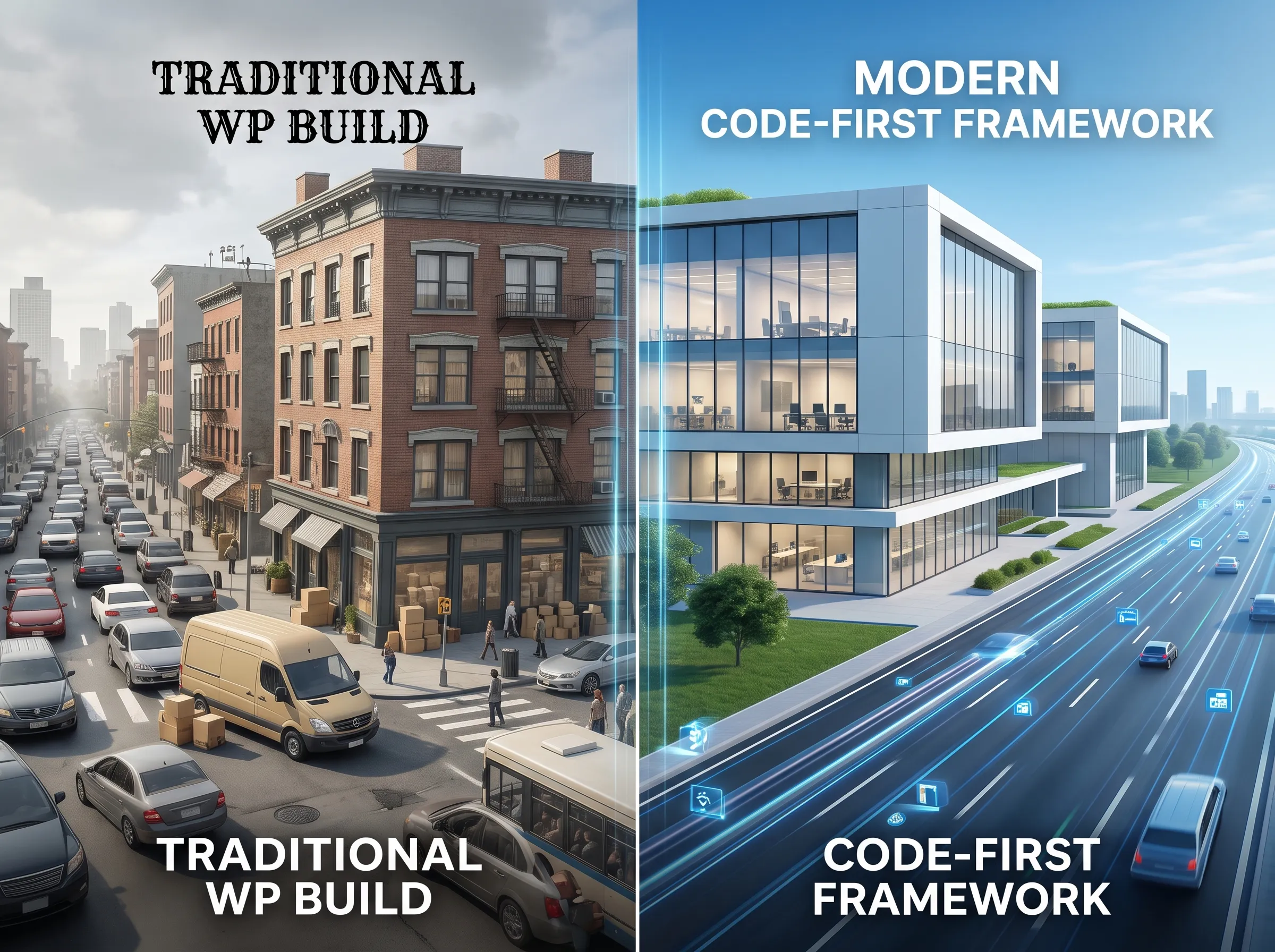
If you own a local trade business, manage a professional practice, or run a service company, your website is often your single most critical marketing asset. It is your digital storefront, your 24/7 sales representative, and the primary destination for local customers searching for your services. At 610 Digital, we see firsthand how a high-performing website serves as the backbone for business growth in competitive local markets.
For over a decade, the standard advice given to small business owners was simple: “Build a website on WordPress so you can log in and update it yourself.”
However, as we look at the web development landscape, that model is undergoing a massive shift. Between emerging AI tools, rising Google Ad costs on slow websites, and changing technology trends, business owners are rethinking how their websites are built and maintained.
Here is a plain-English breakdown of how the web is evolving, what the data shows, and how modern web strategies are delivering better results for local businesses.
1. The WordPress Shift: 2015 to 2026 by the Numbers
To understand where the web is going, it helps to look at where it has been.
For years, WordPress was the undisputed titan of the web. Its rise was meteoric:
- In 2015: WordPress powered approximately 23.3% of all websites on the internet.
- In 2020: That number surged to 35.4%.
- Peak Era (2022–2025): Driven by low-cost page builders and open-source growth, WordPress plateaued at an all-time high of ~43.5% of the internet.
The Recent Plateau & Decline
As of 2026, independent tracking (from sources like W3Techs and the HTTP Archive) shows WordPress market share hovering around 41.2% to 42.6%.
While powering over 40% of the internet is still a massive achievement, this represents the first sustained market share decline for WordPress in over a decade. Where are businesses going instead? They are splitting into two distinct directions:
- Simple DIY Builders: Very small or startup businesses moving to simple hosted builders like Shopify, Wix, or Squarespace.
- High-Performance Modern Web Stacks: Performance-minded businesses and modern agencies transitioning to custom, edge-hosted static platforms (like Astro) that prioritize raw speed and security over database-heavy software. For a deeper dive into why code-first architecture outperforms heavy templates, read our article on Why Custom Design is Your Best SEO Asset.
2. Why the “I Want to Log In and Edit It Myself” Model Failed
Ten years ago, the dream was that a business owner or office receptionist could log into WordPress and easily publish updates, change photos, and modify text. In practice, that dream rarely came true.
The Reality of “Design Debt”
When non-developers log into complex website dashboards, three things typically happen:
- Broken Mobile Layouts: A quick text change accidentally breaks the mobile responsiveness of a page, causing buttons or contact forms to shift off-screen.
- Slow Load Times: Uploading uncompressed 10MB photos straight from a smartphone destroys site speed.
- Security & Maintenance Overhead: A typical WordPress site requires 20 to 30 plugins (for contact forms, security, backups, and caching). When those plugins update — or fail to update — sites crash, run slowly, or become vulnerable to database exploits.
For most local business owners, logging into a website dashboard isn’t empowering — it’s an annoying chore that risks breaking an expensive asset.
3. How AI is Transforming Web Engineering
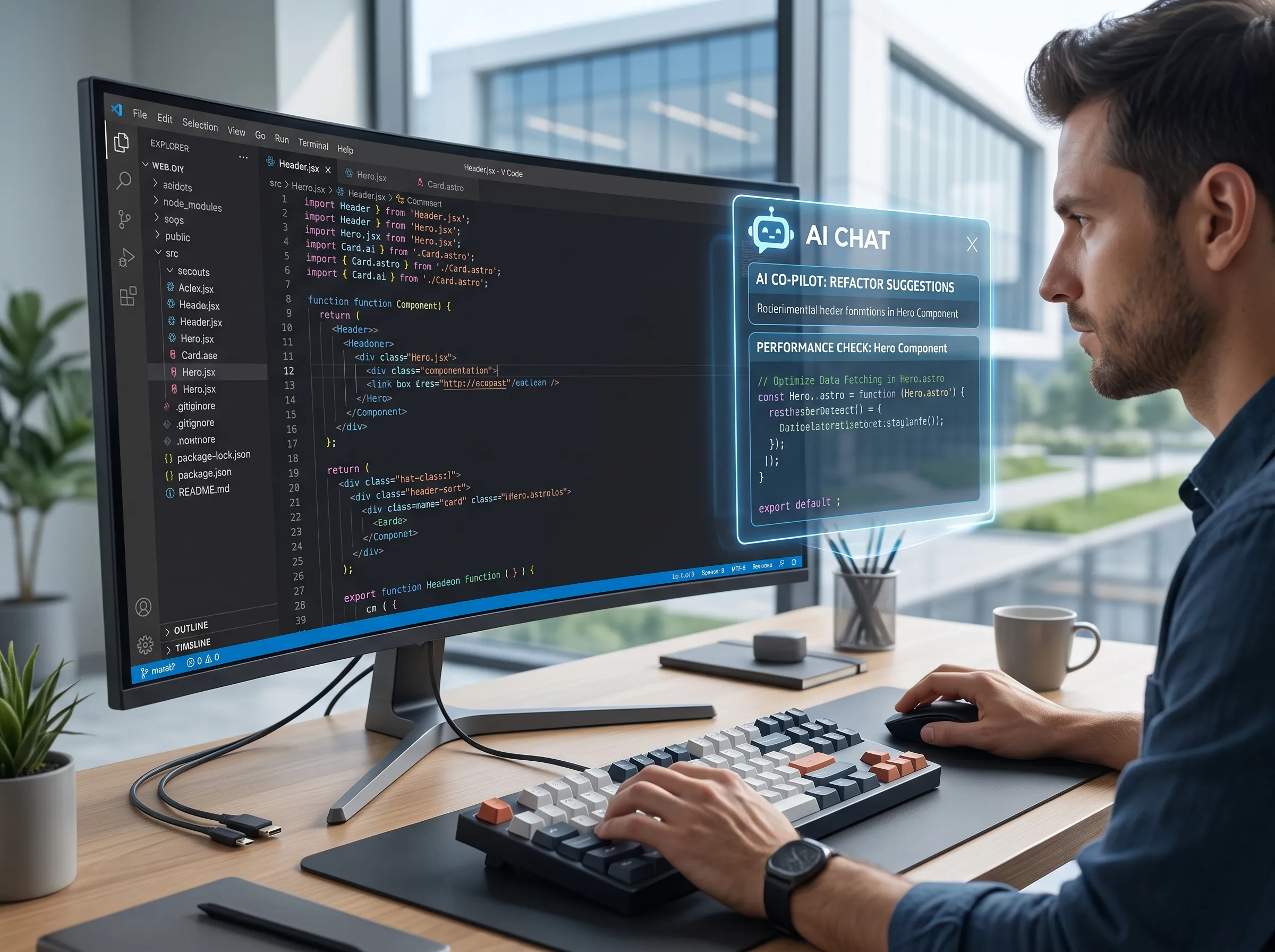
In recent years, Artificial Intelligence (specifically developer tools like Claude Code, Cursor, and Qwen) has completely revolutionized custom software development.
Historically, developers used bulky page builders or visual editors because hand-coding clean, custom HTML, CSS, and TypeScript took weeks. Today, AI acts as a high-speed assistant for veteran developers, as detailed in our guide on Unlocking SMB Growth with AI and WordPress.
What This Means for Local Businesses
Instead of assembling heavy, pre-packaged software with dozens of vulnerable plugins, developers can now write pure, clean, custom code specifically tailored to your business in a fraction of the time.
AI doesn’t replace the veteran developer’s design eye or strategic architecture; it simply removes the manual friction. The result for the business owner is a bespoke, lightning-fast digital asset built to institutional standards without the enterprise price tag.
4. Site Speed Equals Local Revenue (Core Web Vitals)
Why does site speed matter so much for a local plumber, accountant, or contractor? Because search engines and ad platforms now strictly measure user experience. Explore the Essential Elements of Highly Effective Websites to see how speed and structure combine to convert traffic.
- Lower Ad Costs (Google & Meta Ads): Google Ads penalizes slow-loading landing pages by giving them lower Quality Scores. A slow site actually raises your Cost-Per-Click (CPC). A blazing-fast modern site directly reduces advertising costs.
- Higher Conversion Rates: Studies consistently show that if a local service site takes more than 2 seconds to load on a mobile phone, over 50% of prospective clients hit the “Back” button and call a competitor.
- Search Engine Visibility: Google’s Core Web Vitals directly factor page speed and visual stability into local search rankings.
Modern platforms (like Astro) output pure static files hosted on global edge networks (like Cloudflare). This guarantees near 100/100 PageSpeed scores, loading near instantly anywhere in the world.
5. The “Web Mechanic” Model: A Better Return on Investment
Think about how you handle other critical machinery in your business:
- When you buy a commercial vehicle, you don’t perform your own engine diagnostics — you bring it to a trusted car mechanic for routine maintenance and oil changes.
- When you install a commercial water filtration system, you pay a monthly fee for a service technician to inspect and clean the filters regularly.
Your business website should work the same way.

Moving to a White-Glove Managed Service
Instead of paying a monthly fee just to host an aging platform and hoping plugins don’t break your site, forward-thinking businesses are moving to dedicated Web Hosting & Care Plans.
Under a modern Managed Service:
- You Don’t Handle Software: You never log into a dashboard, manage databases, or worry about security patches.
- Guaranteed Uptime & Speed: Your agency maintains a guaranteed SLA keeping your site ultra-fast and 100% online.
- Hands-Free Revisions: Need to swap out a staff photo, update pricing, or add a seasonal promotion banner? You send a quick email to your dedicated web team, and certified professionals handle it cleanly within 24 to 48 hours without compromising your site’s layout or speed.
Conclusion: Investing in Peace of Mind
The web has evolved past the era of fragile, plugin-heavy websites that require business owners to act as part-time IT administrators.
By combining modern, ultra-fast web architectures (like Astro) with AI-accelerated workflows and white-glove professional management, local business owners get the best of both worlds: an elite, ultra-fast online presence that drives lead generation, and complete peace of mind knowing their digital asset is maintained by experts.
Ready to Take Your Website to the Next Level of Performance?
Stop letting slow load times, broken layouts, and constant software updates hold your business back. Whether you need a lightning-fast modern website rebuild or a white-glove team to manage your web infrastructure, 610 Digital is here to build your engine for growth.
Schedule a Free Strategy Call with 610 Digital today and discover how an ultra-fast, professionally managed website can drive predictable revenue for your business.